
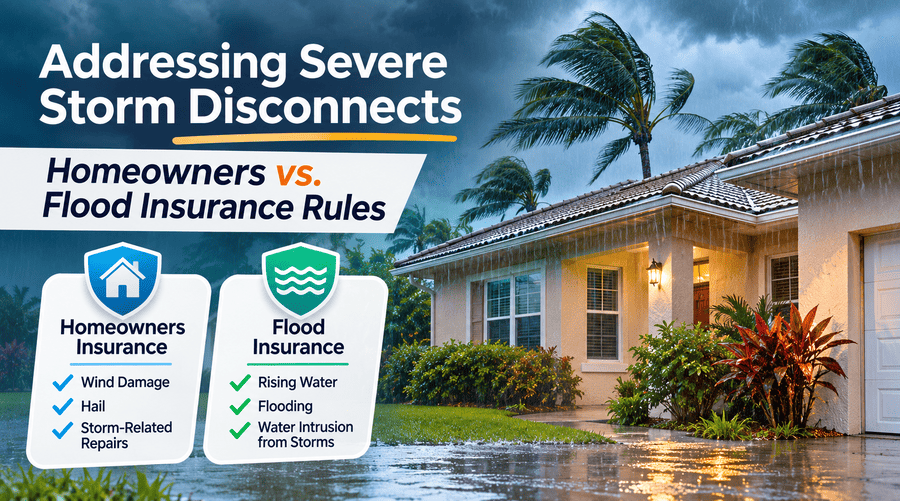
Severe storms can cause different types of water damage, and the way water enters a home can affect which insurance policy may apply. For homeowners reviewing homeowners insurance in Miami, it is important to understand that wind-driven rain, rising floodwater, storm surge, and drain backups may be treated differently under homeowners and flood policies. The Insurance Guy helps homeowners review these separate coverages, identify potential gaps, and understand the questions to ask before storm season.
Homeowners insurance and flood insurance are separate lines of coverage, each with its own terms, exclusions, limits, and claims process. At The Insurance Guy, we help homeowners understand how these policies fit together before a storm makes the question urgent. Knowing what each policy is designed to address can make it easier to spot potential gaps, document damage, and ask informed questions about your protection.
Why Storm Damage Can Lead to Coverage Confusion
A storm rarely causes damage in a neat, single category. Wind can tear shingles from a roof, rain can enter through the opening, and floodwater can later surround the home. Although the damage may result from the same storm, insurers may evaluate each cause of loss under different policy provisions.
That is why a general statement such as “storm damage is covered” may not answer the most important question: which damage, caused in what way, under which policy terms? Coverage depends on the actual policy, applicable endorsements, the facts of the loss, and the insurer’s review. The same storm can produce a covered loss under one policy, a flood claim under another, and damage that is limited or excluded under both.
Water damage is not always flood damage
In everyday conversation, people may use “flooding” to describe any water inside a house. Insurance policies can use more specific definitions. Many homeowners policies distinguish between sudden internal water damage—such as a burst pipe—and water that enters from outside due to flooding. A separate flood policy may cover certain types of qualifying flood damage, subject to its definitions, exclusions, and limits.
For example, rain entering through a storm-damaged roof may be handled differently from water that accumulates on normally dry land and enters the home. Water backing up through a drain may be treated differently again, and may require specific coverage or an endorsement. The details matter, so it is important to read the policy language rather than rely on the name people give the event.
What Homeowners Insurance May Cover After a Storm
A homeowners policy generally provides coverage for a home and its contents against certain listed or covered causes of loss. Depending on the policy and circumstances, it may cover certain wind damage, damage from a fallen tree, or rain that enters after wind creates an opening in the roof or walls. It may also provide additional living expense coverage if a covered loss makes the home uninhabitable, subject to policy conditions and limits.
However, a homeowners policy typically does not act as a substitute for flood insurance. Water that rises from outside and enters the home may fall under a flood exclusion. The insurer may investigate the source and path of the water, the condition of the building, and the specific terms in the contract. A policyholder should not assume that because a storm caused the water, the homeowners policy will cover the resulting damage.
Wind, rain, and the path of water
Consider a hurricane that damages a roof. If rain enters through the opening created by wind, the homeowners policy may handle the resulting damage differently than it would handle water that rises from a nearby canal or street and enters through doors or ground-level openings. Similar-looking water damage may be handled differently depending on its cause and the applicable policy terms.
Wind coverage can also involve special deductibles, particularly in some coastal areas. A windstorm or hurricane deductible may be calculated differently from the standard deductible. Homeowners should review how their deductible is triggered, how it is calculated, and whether it applies to the dwelling, personal property, or both. These terms can have an effect on out-of-pocket costs after a major storm.
What Flood Insurance Is Designed to Address
Flood insurance is intended to cover certain direct physical losses caused by flooding, as defined in the policy. Flood coverage may be available through the National Flood Insurance Program (NFIP) or private insurers. The coverage, limits, waiting periods, definitions, and exclusions can vary. An NFIP policy and a private flood policy should not be assumed to have identical terms.
Flood coverage may help protect the structure and, depending on the policy, certain personal property. But it does not necessarily cover everything in the home, every type of water intrusion, or every expense a household may face. Coverage for basements, temporary living expenses, landscaping, vehicles, and other property or costs can be limited, excluded, or handled outside the policy. Review the contract and ask specific questions before relying on a particular benefit.
Flood risk is not limited to high-risk zones
Homes outside mapped high-risk flood areas can still experience flooding. Heavy rainfall, drainage problems, overwhelmed stormwater systems, coastal surge, and changing local conditions can all contribute to water entering a property. A flood map is one source of information, not a promise that a home will or will not flood.
This is especially relevant for households considering homeowners insurance in Miami. South Florida homeowners may face a combination of intense rainfall, tropical weather, coastal exposure, and neighborhood-specific drainage concerns. Homeowners should review the property’s specific risks and the terms of both homeowners and flood policies.
How Coverage Gaps Develop
A coverage gap can occur when a homeowner expects one policy to respond to damage that is excluded, limited, or covered only under a different policy. Gaps can also arise when a homeowner has flood insurance but assumes it covers all belongings and living expenses, or when the dwelling limit does not reflect rebuilding costs.
Common sources of confusion include:
- Assuming all storm water is covered: The policy may distinguish between rain entering through a wind-created opening and rising floodwater.
- Overlooking deductibles: Separate windstorm, hurricane, or flood deductibles may apply, depending on the policies and circumstances.
- Misunderstanding contents coverage: Personal property may have different limits, exclusions, or valuation terms than the building.
- Expecting automatic living-expense coverage: Additional living expenses may be available under homeowners coverage for covered losses, but flood-related displacement may be treated differently.
- Waiting too long to buy flood insurance: Some policies have waiting periods, with exceptions and rules that depend on the insurer and circumstances.
- Not updating the insured value: Construction costs, renovations, and added belongings can change how much protection a household needs.
These issues are easier to address before a storm than fter storm damage occurs. Reviewing limits, deductibles, exclusions, and policy definitions gives homeowners time to make decisions without the pressure of an active claim.
Coordinating Two Separate Policies
Homeowners insurance and flood insurance remain separate contracts, even when reviewed together. Coordination does not mean that one policy automatically fills every gap left by the other. It means understanding what each policy is intended to cover, where their terms differ, and whether the combined protection fits the household’s coverage needs and budget.
Questions to ask when reviewing coverage
- How does each policy define flood? Ask what kinds of water movement qualify and how the definition affects your property.
- How are wind and hurricane deductibles calculated? Confirm when they apply and how the amount is determined.
- What are the building and contents limits? Check whether the limits reflect likely rebuilding expenses and the value of belongings.
- Are there restrictions on specific areas or property? Ask about basements, detached structures, valuables, and property kept at ground level.
- What happens if the home cannot be occupied? Confirm which policy, if any, may help with temporary housing after different types of losses.
- What documentation should be kept? Ask how to maintain an inventory, photographs, receipts, and records of home improvements.
At The Insurance Guy, we can help organize these questions around your household’s situation and explain how separate insurance lines may interact. Because coverage depends on actual contract language and underwriting rules, a review should focus on the documents themselves—not on assumptions based on a policy’s title or a quick description of the storm.
Steps to Take Before and After a Severe Storm
Before storm season
Start by keeping copies of your policies and noting the insurer’s claim contact information. Photograph the home, major systems, and valuable belongings, and maintain a dated inventory in a secure place. Save receipts for improvements and keep records of roof repairs or mitigation work. Ask your insurance professional to explain confusing terms in writing where possible, especially deductibles, water exclusions, and claim-reporting requirements.
It can also help to reduce the chance of preventable damage. Maintain gutters and drainage areas, secure outdoor items, and follow local guidance about shutters and storm preparation. These steps do not determine whether a claim will be covered, but they can help homeowners prepare before severe weather.
After a storm
Put safety first. Avoid standing water if there may be electrical hazards, and follow instructions from local authorities. Once it is safe, take photographs and video before removing damaged materials, if doing so will not create additional risk. Keep receipts for emergency repairs and necessary expenses, and contact the relevant insurer promptly to report the loss.
Describe what happened as accurately as possible. Avoid guessing about the cause of water damage if you do not know; instead, explain what you observed and when. Keep copies of communications and ask how to preserve damaged property for inspection. If more than one policy may be involved, notify the appropriate insurers and maintain a clear timeline of contacts and claim numbers.
Prepare for Clarity, Not Assumptions
Severe storms can create complicated losses, but the insurance questions do not have to begin after the damage occurs. Homeowners insurance and flood insurance address different risks, and their boundaries are shaped by definitions, exclusions, deductibles, limits, and the facts of each event. A roof opening, rising water, and drain backup are not interchangeable descriptions in a policy review.
Reviewing both policies together can help identify where expected coverage differs from policy terms. The Insurance Guy encourages homeowners to ask direct questions, confirm important terms, and revisit their protection as the home and its risks change. A policy review before storm season can help you understand your current coverage, identify questions, and prepare for the claims process if damage occurs.
For general flood-risk information, homeowners can consult FloodSmart and review relevant policy documents with a qualified insurance professional. The most useful time to understand the distinction between homeowners and flood insurance is before severe weather is in the forecast.
Not sure how your homeowners and flood policies may respond after a severe storm? Contact The Insurance Guy to review your homeowners insurance Miami coverage, flood policy, deductibles, exclusions, limits, and potential gaps. Our team can help you understand how the policies differ and which questions to address before hurricane and storm season.